Welcome to Day 1386 of our Wisdom-Trek, and thank you for joining me.
I am Guthrie Chamberlain, Your Guide to Wisdom
Mastering the Bible – Acts and Israelite Culture – Worldview Wednesday
Wisdom – the final frontier to true knowledge. Welcome to Wisdom-Trek! Where our mission is to create a legacy of wisdom, to seek out discernment and insights, to boldly grow where few have chosen to grow before. Hello, my friend, I am Guthrie Chamberlain, your captain on our journey to increase Wisdom and Create a Living Legacy. Thank you for joining us today as we explore wisdom on our 2nd millennium of podcasts. Today is Day 1386 of our Trek, and it is Worldview Wednesday. Creating a Biblical Worldview is essential to have a proper perspective on today’s current events. To establish a Biblical Worldview, you must have a proper understanding of God and His Word. Our focus for the next several months on Worldview Wednesday is Mastering the Bible, through a series of brief insights. These insights are extracted from a book of the same title from one of today’s most prominent Hebrew Scholars, Dr. Micheal S. Heiser. This book is a collection of insights designed to help you understand the Bible better. When we let the Bible be what it is, we can understand it as the original readers did, and as its writers intended. Each week we will explore two insights.
Mastering The Bible – Acts and Israelite Culture
Insight Sixty-Three: The Book of Acts is Both Prescriptive and Descriptive
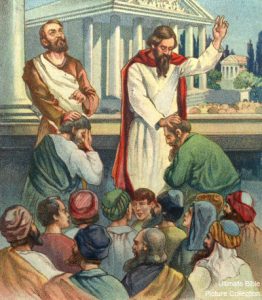 One of the most controversial questions concerning the book of Acts is whether it is prescriptive or descriptive. The two options are clear enough. The prescriptive view says that the practices of the early church in the book of Acts are normative. In other words, they should be practiced today. For some, this extends to experiences as well. They argue that believers today should be experiencing displays of power, like speaking in tongues and healing. The descriptive view argues that Acts simply describes what happened. For this view, there is, therefore, no requirement to imitate precisely what the early church experienced or did.
It isn’t hard to discern that there is truth in both positions. The difficulty is one of extent. The book of Acts very obviously prescribes things like believers meeting with regularity, prayer, meeting each other’s needs, and appointing leaders (both Jews and gentiles). But are we to presume the leadership of the church has apostolic authority? Should we meet in house churches daily (Acts 5:42)? Should we expect to perform signs and wonders, and if so, are they only to be performed by apostles and those upon whom they have laid hands (Acts 2:43; 6:8; 8:6, 13; 14:3)? In modern times, when wealth is held in ways outside tangible goods, how can we truly have all things in common (Acts 2:44)? It seems clear that these things are, at least to some extent, only descriptive.
This question is directly related to apostolic authority. While the book of Acts clearly shows the apostles appointing servant leaders in the church (Acts 6), there is no evidence that the office of apostle has continued. There were several kinds of apostles in the New Testament. The Greek word (apostolos) simply means “sent one,” so it generally refers to individuals sent to help other churches. In cases like these, modern translations at times render the term as “messenger” (2 Cor. 8:23; Phil. 2:25) One specific group of “sent ones” were the Twelve (John 20:24; Acts 6:2; 1 Cor 15:5), those who had been taught by Jesus. When choosing a new Apostle to replace Judas, this is what Acts 1:21-22 says, “So now we must choose a replacement for Judas from among the men who were with us the entire time we were traveling with the Lord Jesus— from the time he was baptized by John until the day he was taken from us. Whoever is chosen will join us as a witness of Jesus’ resurrection.”
Paul directly encountered Jesus (Acts 9) and was taught by him personally (Gal. 1:12; 1 Cor. 11:23; 15:3b so he rightly belongs to a second group of people selected by God to minister to gentiles (1 Cor. 15:7—9; Gal. 1:19; 2:9; Acts 13:2-3; 14:4, 14; 15:40; 1 Cor. 9:6; 1 Thess. 2:6). So far as we can see in the New Testament, it was apostles in these two groups that laid hands on people to gift them for service in the power of the Holy Spirit. That gifting included the power to do signs and wonders, which was critical for the early church, whose new message (repeatedly called a “mystery” in the New Testament; e.g., Eph. 3:3—6; Col. 1:26—27) had to be validated as actually coming from God.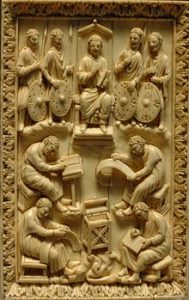 Consequently, to argue that everything in Acts is prescriptive requires the continuation of the second group. This group did not continue for the obvious reason that the original apostles were all dead by the end of the first century. While the apostles appointed leaders in the early church (including gentile churches founded by Paul), their status could not be duplicated.
Insight Sixty-Four: God Never Intended That His People Be Permanently Identified with Ancient Israelite or Jewish Culture
 God didn’t ordain the culture of patriarchs like Abraham, Isaac, and Jacob. They were part of the ancient Near Eastern world. The law given to Moses presumed preexisting cultural values common to this wide geographical region. This is evident in part because the laws of other nations have some overlap with laws in the Torah. This is not to say that Israel had no unique laws or cultural trappings. There was such an overlap, but it was tied to faith in the God of Israel, the God of the Bible.
From the call of Abraham forward, God’s relationship with Israel hints that God’s human family would extend beyond the world of the ancient Near East. God told Abraham in Genesis 12:3. I will bless those who bless you and curse those who treat you with contempt. All the families on earth will be blessed through you.
Even though Abraham and Israel were called to be distinct, God knew his salvation plan was bigger than any ethnic or cultural identity. The book of Acts makes this point unmistakable.
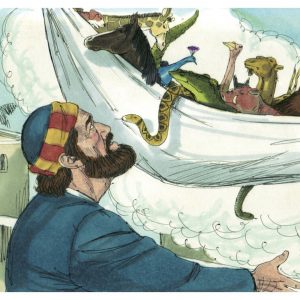
Acts 10 records the conversion of Cornelius, a Roman centurion, and a gentile. His is the first conversion account of a non-Jew in the New Testament. Peter played a central role in this conversion, but only after God had given him a dramatic vision that would convince him that the gospel of Jesus, Israel’s Messiah, was for gentiles as well as Jews as recorded in Acts 10:11-15. He saw the sky open, and something like a large sheet was let down by its four corners. In the sheet were all sorts of animals, reptiles, and birds. Then a voice said to him, “Get up, Peter; kill and eat them.” “No, Lord,” Peter declared. “I have never eaten anything that our Jewish laws have declared impure and unclean.” But the voice spoke again: “Do not call something unclean if God has made it clean.”
The dietary laws of the Torah were well known to Peter. Judging by his response to the vision, he strictly observed them throughout his life. The divine command to “kill and eat” unclean animals, and the interpretation of the vision, was an object lesson for Peter. God would direct him to the house of Cornelius later in the chapter (Acts 10:17-33). To his surprise, he was expected. Cornelius had been seeking God (Acts 10:1-8), and God answered by sending an angel to tell him a man named Peter would tell him what he needed to hear. When Cornelius told him about the angel, the vision God had sent him earlier opened his eyes in Acts 10:34-35. Then Peter replied, “I see very clearly that God shows no favoritism. In every nation, he accepts those who fear him and do what is right. The result of Peter’s visit opened the floodgates to the spread of the gospel to “all nations of the earth” (Gen. 12:3), irrespective of culture.
That will conclude this week’s lesson on another two insights from Dr. Heiser’s book “Mastering The Bible.” Next Worldview Wednesday, we will continue with two additional insights. I believe you will find each Worldview Wednesday an interesting topic to consider as we build our Biblical Worldview.
Tomorrow we will continue with our 3-minute Humor nugget that will provide you with a bit of cheer, which will help you to lighten up and live a rich and satisfying life. So encourage your friends and family to join us and then come along with us tomorrow for another day of ‘Wisdom-Trek, Creating a Legacy.’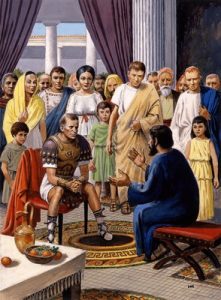 If you would like to listen to any of our past 1385 treks or read the Wisdom Journal, they are available at Wisdom-Trek.com. I encourage you to subscribe to Wisdom-Trek on your favorite podcast player so that each day’s trek will be downloaded automatically.
Thank you so much for allowing me to be your guide, mentor, and, most of all, your friend as I serve you in through this Wisdom-Trek podcast and journal.
As we take this Trek together, let us always:
- Live Abundantly (Fully)
- Love Unconditionally
- Listen Intentionally
- Learn Continuously
- Lend to others Generously
- Lead with Integrity
- Leave a Living Legacy Each Day
I am Guthrie Chamberlain….reminding you to ’Keep Moving Forward,’ ‘Enjoy your Journey,’ and ‘Create a Great Day…Everyday’! See you Tomorrow!
 At all times, but especially in times of crises like the Covid-19, we need to seek out those who are in desperate need. There are so many individuals and small businesses who have been financially and physically devastated. If we are going to live our faith, then we need to be willing to show it by helping those who are in need. I realize that you may not be able to help out financially yourself, but is there some other tangible way to assist? I realize that we are just starting to come out of our shelter in place guidelines, so now is the time to start planning on how you can tangibly make a difference in the lives of your family, your neighbors, your church, or social community. Yes, for a while, we may need to be inconvenienced and continue some social distancing while we are among groups of people, but that should not stop us from making a meaningful impact on the lives of others. We can learn how important this by reading
 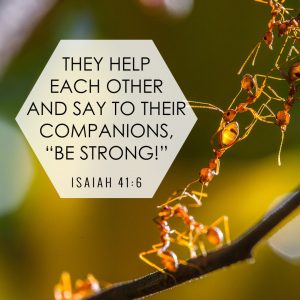 If you are unable to assist others tangibly, or if you are part of a higher risk group, you can assist even more powerfully through effectual and fervent prayer for those in need.
 That’s a wrap for today’s Wisdom Unplugged quote. If you would like free access to my database of over 11,000 inspirational quotes, the link is available on the main page of Wisdom-Trek.com. Just as you enjoy these nuggets of wisdom, encourage your friends and family to join us and then come along tomorrow for another day of ‘Wisdom-Trek, Creating a Legacy.’
  If you would like to listen to any of our past 1384 treks or read the Wisdom Journal, they are available at Wisdom-Trek.com. I encourage you to subscribe to Wisdom-Trek on your favorite podcast player so that each day’s trek will be downloaded automatically.
 The entire world is still, for the most part, under shelter in place orders due to the Covid-19 pandemic. This has been such a trying and uncertain time for so many people. I see that many have lost their hope. Some have lost their jobs. Some may lose their businesses. Some have become ill, and yes, some have lost their life. It is so easy to lose hope during these times.
 I have to admit, though, even for the most mature Christ-followers, there are days where it is difficult to maintain a reasonable level of hope. Our world, as we knew it will probably never return to what was normal. We have to make sure that we are prepared, in our minds and heart, for whatever our new normal becomes. Nobody on earth, at this point, knows what that will be. So today, I would like to offer four steps along the road of having a life with hope, meaning, and purpose, even during these days.
 I believe that hope is in God. Many of those who have given up on finding hope have done so because they spent their time looking to the wrong things, as I mentioned above. People place their hope in other government programs and people, only to be let down. Prior to this pandemic, many people placed their faith in wealth and possessions, only now to have that faith shaken by economic turmoil. Others look to science and our experts in diseases, but find that the hope science offers is short-term, not reaching beyond the limits of this world’s experts. Only God can offer hope for this life by offering a promise of another life to come.
 If you would like to listen to any of the past 1372 daily treks or read the associated journals, they are all available at Wisdom-Trek.com. I encourage you to subscribe to Wisdom-Trek on your favorite podcast player so that each day will be downloaded to you automatically.
 The Smith family consisted of Mom, Dad, and the six kids ranging in age from six to fourteen. The kids always wanted a pet, but their house was just not large enough for a dog, and Dad was allergic to cats. The kids got together and decided maybe a hamster would be a good alternative. They presented their case to mom and dad. At first, the parents were adamant that they did not want any pets in the house. As the weeks went by, with constant begging every night at the dinner table, mom and dad finally relented, but only after the kids promised that they would take complete care of the hamster. The next day they all went to the local pet store and fell in love with a hamster which they named Butch. The kids fawned over their new pet, and everything went fine for the first couple of weeks. They were diligent with feeding and caring for Butch. Soon the novelty of Butch wore off, and mom and dad’s primary concern started to manifest itself. They had to remind the kids of their promise continually, but that seemed to fall on to deaf ears. Soon mom found herself feeding, providing water, and cleaning the cage each week. This situation went on for about a month when one evening after changing a smelly cage, mom stormed into the kid’s bedroom, and with exasperation, in her voice, she shouted. “How many times do you think Butch would have died if I hadn’t looked after him?”
 I hope that brought a smile to your face today. If it did pass your smile onto some else, we all could use a kind smile each day. Our Thursday thought is, “Have you ever just looked at someone and knew the wheel was turning, but the hamster was dead?”
  If you would like to listen to any of our past 1371 treks or read the Wisdom Journal, they are all available at Wisdom-Trek.com. I encourage you to subscribe to Wisdom-Trek on your favorite podcast player so that each day will be downloaded to you automatically.
 Hank, an avid golfer, was on the golf course as usual on a beautiful, sunny, Saturday morning. Hank took golf very seriously, and considered himself a rather good duffer. He was on the first hole, which was right in front of the pro shop. Hank stepped up to the red ladies’ tee and took his stance, preparing for what he hoped to be a long drive. As he began his backstroke, a voice boomed over the public address system: “Would the man hitting his ball from the ladies tee, please move it back to the men’s tee?!”
 If you would like to listen to any of our past 1366 treks or read the Wisdom Journal, they are all available at Wisdom-Trek.com. I encourage you to subscribe to Wisdom-Trek on your favorite podcast player so that each day will be downloaded to you automatically.