Welcome to Day 1371 of our Wisdom-Trek, and thank you for joining me.
I am Guthrie Chamberlain, Your Guide to Wisdom
Mastering the Bible – Biblical Agendas and Translations – Worldview Wednesday
Wisdom – the final frontier to true knowledge. Welcome to Wisdom-Trek where our mission is to create a legacy of wisdom, to seek out discernment and insights, and to boldly grow where few have chosen to grow before.
Hello, my friend, I am Guthrie Chamberlain, your captain on our journey to increase wisdom and create a living legacy. Thank you for joining us today as we explore wisdom on our 2nd millennium of podcasts. Today is Day 1371 of our trek, and it is Worldview Wednesday. Creating a Biblical Worldview is essential to have a proper perspective on today’s current events.
To establish a Biblical worldview, you must have a proper understanding of God and His Word. Our focus for the next several months on Worldview Wednesday is Mastering the Bible, through a series of brief insights. These insights are extracted from a book of the same title from one of today’s most prominent Hebrew Scholars, Dr. Micheal S. Heiser. This book is a collection of insights designed to help you understand the Bible better. When we let the Bible be what it is, we can understand it as the original readers did and as its writers intended. Each week we will explore two insights.
Mastering The Bible – Biblical Agendas and Translations
Insight Fifty-Seven: Each Gospel Writer Had His Own Agenda

There are four Gospels for a reason. Their existence isn’t an accident. The fact that more than one was written suggests that each writer had a slightly different audience in mind. Examining their content validates that hunch.
Unlike other gospels, the Gospel of Matthew nowhere states a specific purpose or occasion for Matthew’s enterprise. Determining Matthew’s audience and objective can only be accomplished by careful reading. Matthew references the Old Testament more than the other Gospels, with a special interest in messianic themes such as establishing that Jesus was the “son of David” and how his life fulfilled Old Testament prophecies about the Messiah. Matthew uses distinctive phrases from Jewish literature (e.g., “Father in heaven”) more than other Gospels. He includes Jewish customs and terms without explaining them to readers (23:5, 27; 15:2; compared to Mark 7:2-4). All of these things, and others indicate that Matthew was writing to a Jewish audience to convince them that Jesus was their Messiah.
One of the unusual things scholars have noticed about Mark’s Gospel is the frequent use (forty-two times) of the Greek adverb euthus (often translated “immediately”). Mark consistently presents Jesus as a man of action—getting things done with expediency. Mark omits Jesus’s birth and childhood, and there is no genealogy. These things don’t matter to Mark’s audience. He writes to people more concerned about what Jesus does than who he is, which is very different from Matthew. These features make Mark’s account conform to Roman cultural values. This is especially important because of the way Jesus died as a criminal by the heinous method of crucifixion. Mark needs to explain why the crucifixion happened to this audience, and so he blends a description of a man they can admire with a defense of the Gospel.
Luke tells us at the outset that he is writing to a Greek friend, Theophilus. Luke (Loukas) is a Greek name. Luke uses Greek terms not found in the other Gospels. He seeks to reach a Hellenized world, not Jews or Romans, with the Gospel of Jesus. His strategy is a lengthy letter—his Gospel—to Theophilus, that he “might have certainty” concerning what he’d heard about Jesus (Luke 1:1-4).
Lastly, we come to John, the Gospel with the most unique material. John’s agenda is nevertheless transparent. His Gospel devotes the most concerted effort to presenting the deity of Jesus Christ. Only in John do we get the seven “I AM” statements of Jesus, a phrase hearkening back to the name of God given in the burning bush. John includes unique statements uttered by Jesus: “The Father and I are one” (John 10:30); “Anyone who has seen me has seen the Father” ( John 14:9); “Then you will know and understand that the Father is in me, and I am in the Father” (John 10:38). And John tells us why. He wrote his Gospel so that readers understood, “But these are written so that you may continue to believe that Jesus is the Messiah, the Son of God, and that by believing in him you will have life by the power of his name” (John 20:31).
Insight Fifty-Eight: The New Testament Writers Used a Bible Translation for Their Work
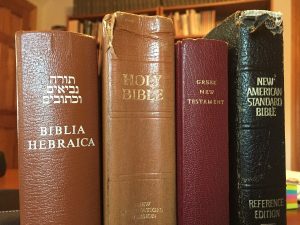
The Bible of Jesus and the apostles was the Old Testament. The Old Testament was written primarily in Hebrew, the language of ancient Israelites and Jews. Jesus and his disciples probably had some knowledge of Hebrew, but the common language of Judea in the first century was Aramaic. The Hebrew Bible had been translated into Aramaic by Jesus’s day. Consequently, the odds are high that Jesus and the Twelve would have preached from a Bible in Aramaic—a translation.
Despite the fact that Aramaic Bibles were commonplace and Jews in the Holy Land spoke Aramaic, the New Testament wasn’t originally written in Aramaic. Instead, it was written in Greek. The reason was that Judea wasn’t the whole world. Aramaic may have been the common tongue in Judea, but the rest of the world spoke Greek.
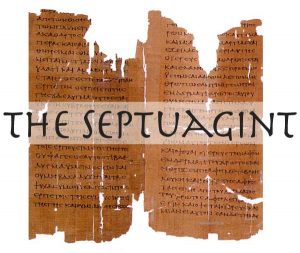
Fortunately, the Hebrew Old Testament had been translated into Greek a couple of centuries before Jesus was born. That Greek translation was called the Septuagint. Since the New Testament writers could communicate with the entire known world in Greek, the New Testament was written in that language. So, for the most part, the Septuagint was used to quote the Old Testament. There was a Greek orientation to both testaments in the earliest days of the church. Considering this, the Septuagint and the New Testament combined to serve as the Bible of the earliest Christians.

This has ramifications when it comes to reading and understanding the New Testament. For one thing, at times, the Septuagint says things that the Hebrew Old Testament (referred to as the Masoretic Text now) does not. The New Testament use of Old Testament verses for articulating theological points at times makes use of these differences. When that’s the case, modern study Bibles indicate that in footnotes. Sometimes the differences derive from the translation technique. In other instances (e.g., Deuteronomy 32:8-9, 43), the difference comes from the fact that the Hebrew text used to produce the Septuagint differed from what we now regard as the traditional Hebrew (Masoretic) text. Knowing this can resolve apparent contradictions and explain what a New Testament writer saw in a particular Old Testament verse that might seem obscure to us.
The fact that Jesus, the disciples, the New Testament writers, and the earliest Christians used translations ought to encourage us today. If Jesus, Matthew, John, and Paul, for example, can trust a translation to be the word of God, so can we. Fortunately, we have thousands of manuscripts in the original languages of the Bible that scholars can reference to validate or improve translations, not only for English translations but for translations in languages used around the world. Bible translation is never perfect since no translator is omniscient, but it is light years from a haphazard, imprecise discipline. Know that you have the word of God just like Jesus and the disciples did.
That will conclude this week’s lesson on another two insights from Dr. Heiser’s book Mastering the Bible. Next Worldview Wednesday, we will continue with two additional insights. I believe you will find each Worldview Wednesday an interesting topic to consider as we build our Biblical Worldview.
Tomorrow we will continue with our 3-minute humor nugget that will provide you with a bit of cheer and help you to lighten up and live a rich and satisfying life. So encourage your friends and family to join us and then come along with us tomorrow for another day of our Wisdom-Trek, Creating a Legacy.
If you would like to listen to any of our past 1370 treks or read the Wisdom Journal, they are available at Wisdom-Trek.com. I encourage you to subscribe to Wisdom-Trek on your favorite podcast player so that each day’s trek will be downloaded automatically.
Thank you for allowing me to be your guide, mentor, and most importantly, your friend as I serve you through the Wisdom-Trek podcast and journal.
As we take this trek together, let us always:
- Live Abundantly (Fully)
- Love Unconditionally
- Listen Intentionally
- Learn Continuously
- Lend to others Generously
- Lead with Integrity
- Leave a Living Legacy Each Day
I am Guthrie Chamberlain reminding you to Keep Moving Forward, Enjoy Your Journey, and Create a Great Day Everyday! See you tomorrow!
 In today’s politically charged societal environment, all too many people are not at all careful about how they speak to others. This is especially true online where cowards can hide behind their computers in a shroud of anonymity and spew all sorts of cold or hot or bitter or wrathful words. These cowards show little concern that they are destroying people who are created as bearers of God’s image. Especially in these times of crisis that we find ourselves in today, it is more important than ever to watch what we say, and how we speak to others. We all are well-advised by the golden rule found in
  Instead, we should only speak words of kindness, love, and compassion. Regardless of whether you agree with others, that is no reason to treat them as if they are worthless. In its place, practice words of encouragement. Especially in these uncertain and chaotic times, let us show love to one another.
 If you would like to listen to any of our past 1369 treks or read the Wisdom Journal, they are available at Wisdom-Trek.com. I encourage you to subscribe to Wisdom-Trek on your favorite podcast player so that each day’s trek will be downloaded automatically.
 Let’s face it; we like to be in control of our lives, and the situations that impact us. Every week that goes by, we wonder, will life ever return to some sort of normalcy? It causes us all to be on edge. Many of you may have lost your jobs, or are fearful that you will. We don’t know if it is safe to leave our homes, just to pick up a few supplies. We don’t know if we will be homeschooling the remainder of this year, or even during the summer. We just don’t know a lot of things right now. For some of us, life has not changed dramatically, but for many it has. Regardless, it is causing all of us stress that we don’t want, and wish would go away. When we stop, take a breath, relax, reflect, and are honest about our current situation, we have to admit, our lives before Covid-19 also had it share of stress. It is just different now.
 As a Christ-follower, we need to control our minds. Controlling our thoughts is best accomplished through the washing of our minds with God’s Word.
  That is a wrap for today’s Meditation, next week; we will continue our trek on Meditation Monday as we take time to reflect on what is most important in creating our living legacy. On tomorrow’s trek, we will explore another wisdom quote. This 3-minute wisdom supplement will assist you in becoming healthy, wealthy, and wise each day. Thank you for joining me on this trek called life. Encourage your friends and family to join us and then come along tomorrow for another day of ‘Wisdom-Trek, Creating a Legacy.’
  If you would like to listen to any of the past 1368 daily treks or read the daily journal, they are available at Wisdom-Trek.com. I encourage you to subscribe to Wisdom-Trek on your favorite podcast player so that each day will be downloaded to you automatically.
 If you spend much time watching or reading news from the mainstream news outlets, or much of what is on social media, you need to stop now, and encourage those you know to stop. For the most part, they are talking heads, and their purpose is to sensationalize the news to attract viewers. This is not the type of communication that we need now, or ever.
 How can we make sharing our faith into a regular part of our lives? Here are a few ideas:
 That is a wrap for today’s question. Join us again next Friday for another question on our ‘Ask Gramps’ episode. Our next trek is Mediation Monday, where we will help you reflect on what is most important in life. So encourage your friends and family to join us and then come along on Monday for another day of ‘Wisdom-Trek, Creating a Legacy.’
 If you would like to listen to any of the past 1367 daily treks or read the associated journals, they are all available at Wisdom-Trek.com. I encourage you to subscribe to Wisdom-Trek on your favorite podcast player so that each day will be downloaded to you automatically.
 Hank, an avid golfer, was on the golf course as usual on a beautiful, sunny, Saturday morning. Hank took golf very seriously, and considered himself a rather good duffer. He was on the first hole, which was right in front of the pro shop. Hank stepped up to the red ladies’ tee and took his stance, preparing for what he hoped to be a long drive. As he began his backstroke, a voice boomed over the public address system: “Would the man hitting his ball from the ladies tee, please move it back to the men’s tee?!”
 If you would like to listen to any of our past 1366 treks or read the Wisdom Journal, they are all available at Wisdom-Trek.com. I encourage you to subscribe to Wisdom-Trek on your favorite podcast player so that each day will be downloaded to you automatically.