Welcome to Day 1436 of our Wisdom-Trek, and thank you for joining me.
I am Guthrie Chamberlain, Your Guide to Wisdom
Biblical Foundations – Elohim and the Supernatural Worldview – Worldview Wednesday
Wisdom – the final frontier to true knowledge. Welcome to Wisdom-Trek! Where our mission is to create a legacy of wisdom, to seek out discernment and insights, to boldly grow where few have chosen to grow before. Hello, my friend, I am Guthrie Chamberlain, your captain on our journey to increase Wisdom and Create a Living Legacy. Thank you for joining us today as we explore wisdom on our 2nd millennium of podcasts. Today is Day 1436 of our Trek, and it is Worldview Wednesday. Creating a Biblical Worldview is essential to have a proper perspective on today’s current events. To establish a Biblical Worldview, you must have a proper understanding of God and His Word. This week, on our Worldview Wednesday episode, we will continue with a new study, based on a course I recently completed taught by Dr. Michael Heiser. Our study is titled “Sons and Daughters of God: The Believer’s Identity, Calling, and Destiny” Throughout this multi-week course we will demonstrate that, in the Old Testament, “sons of God” and “holy ones” refers to supernatural beings whose Father is God and who work with God to carry out His will and that this divine family was present before humanity. By fully engaging with biblical texts such as Psalm 82; Psalm 89, and Deuteronomy 32:8–9, our study will show that this divine family functions as a template for God’s human family. God desires of humans, as His imagers, to participate in His council. This study addresses issues such as polytheism, the nature of the (little ‘g’) “gods,” and the uniqueness of Yahweh. Within this study, we will apply insights to the New Testament texts and shows how the metaphor of being in God’s family informs our sense of identity and mission as believers.
Biblical Foundations
· Segment 3: Crucial Passages
 Getting Comfortable with a Supernatural Worldview
Now, if we’re honest, we have to admit we aren’t used to thinking about our own identity and our calling and our destiny against the backdrop of the heavenly host, God’s divine family. Some of that is due to sort of neglect of the patterns. Even though the patterns are there, a lot of people are never discovering them, or never taught them, but they are actually important, and I think we will be able to see that in the course of our course using this trajectory.
Sometimes there is a fear of the supernatural Worldview. There are some passages that we’re going to look at that are controversial, where people actually try to explain the supernatural elements away. That’s a mistake; it’s a mistake to demythologize passages that actually help us think as the ancient writers think and, in this case, actually help us discover a template that helps us discern what God wanted to do with humanity from the very beginning in terms of family relationships and calling and destiny.
Elohim in Psalm 82
Let’s start with Psalm 82. In the very first verse, we read, “God [and that’s the Hebrew word elohim] has taken his place in the divine council; in the midst of the gods he holds judgment.” That second word, “gods” with an s on the end of it, is also the word elohim. We have elohim occurring two times in the same verse, and because of reasons of Hebrew grammar, the first one is singular, and the second one is plural.
Now, we know that the second one is plural as well from verse 6 in the same psalm. God is speaking to the members of His divine council, this heavenly host, and He says, “I said, ‘You are gods [the word elohim again], sons [plural] of the Most High, all of you.’ ” Now “sons of the Most High” is obviously plural. That means the elohim of Psa 82:6, which refers back to Psa 82:1, is also plural. Sons of God are derivative from members of lesser beings in God’s family. They are sons of the God of the Bible, sons of the Most High. There is no other Most High than the God of the Bible. So we have a divine family here. Sons of God in Psalm 89
Let’s go to Psalm 89 and look at another passage where we have the same sort of picture drawn for us. In Psalm 89:5 we read,
Let the heavens praise your wonders, O Lord,
your faithfulness in the assembly of the holy ones!
For who in the skies can be compared to the Lord?
Who among the heavenly beings [literally in Hebrew, it’s “sons of God”] is like the Lord, a God greatly to be feared in the council of the holy ones,
and awesome above all who are around him?
Sons of God in Job 1–2
Job 1-2 gives us the same flavor. In Job 1:6, we read, “Now there was a day when the sons of God came to present themselves before the Lord, and Satan also came among them.” Job 2:1, almost identical to the verse we just read: “Again there was a day when the sons of God came to present themselves before the Lord, and Satan also came among them to present himself before the Lord.”
Family and Bureaucracy
Now, what we have here is that God is the leader of a council or assembly of holy ones, which are multiple elohim (little ‘g’ “gods” with an s on the end). These plural elohim, these multiple elohim, these gods were created by God; they are His sons. Again, the family language telegraphs certain things. They come from Him. They didn’t produce the God of the Bible. It’s never the other way around. God is the one who is credited with their existence. We have a divine family here (“sons” language communicates family), and we also have a divine bureaucracy.
This group meets with God to conduct business of some sort, to get things done, to pass decrees, to render judgments. This is going to be vital as we proceed. Actually, both elements—the family element and the bureaucracy element—are going to be a helpful template for what God was thinking when He created humanity in the first place. But to be honest, these passages also raise a number of questions, and we’re going to turn to those questions first to get them settled as we proceed.
· Segment 4: Introducing Logical Questions Questions Regarding the Nature of the Elohim
Now, the passages we just looked at (Psalm 82; Psalm 89; Job 1:6; Job 2:1, and of course, there are others that can be brought into the mix), they raise a number of questions, and in my experience, these are the most common: Are these plural elohim of this council, are these actually just references to the Trinity? Are they angels? Is that a better way to refer to them than using a word like “gods”? Maybe they are idols? Could they, in fact, be idols, these references?
Some would argue that they are even people. Are these human beings, like Jewish leaders, judges of Israel, things like that? All those questions really sort of lead to this one fundamentally big one: Are these gods real? And how do we even think about that? Because if they are real, then what about monotheism? What about polytheism? This sounds polytheistic. What about the verses that say, “There are no gods besides Yahweh of Israel”?
“Where is Jesus within all this?” is another good question. I mean, He is the “only begotten Son of God,” and then now, we have all these other sons of God running around the Old Testament. How do we think about Jesus in light of all this? And why would God even need a council? What’s the point of having this terminology at all?
Importance of Answering Questions
Now, we’re going to go through all of these questions pretty briefly. They’re all important, but not just for knowing what Scripture does and doesn’t say. They are essential for understanding how God’s supernatural family bureaucracy, mainly His family and His home business (we want to use those metaphors), how that works, how those things work in tandem, and how they help us understand our own status, our own calling, and our own destiny.[1]
That will conclude our next two segments in our study, “Sons and Daughters of God: The Believers Identity, Calling, and Destiny.” Join us again next week. I believe you will find each Worldview Wednesday contains thought-provoking topics to consider as we build our Biblical Worldview.
Tomorrow we will continue with our 3-minute Humor nugget that will provide you with a bit of cheer, which will help you to lighten up and live a rich and satisfying life. So encourage your friends and family to join us and then come along with us tomorrow for another day of ‘Wisdom-Trek, Creating a Legacy.’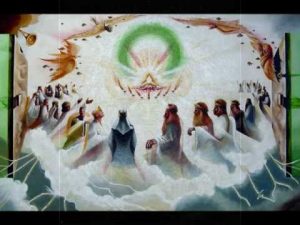 If you would like to listen to any of our past 1435 treks or read the Wisdom Journal, they are available at Wisdom-Trek.com. I encourage you to subscribe to Wisdom-Trek on your favorite podcast player so that each day’s trek will be downloaded automatically.
Thank you so much for allowing me to be your guide, mentor, and, most of all, your friend as I serve you in through this Wisdom-Trek podcast and journal.
As we take this Trek together, let us always:
- Live Abundantly (Fully)
- Love Unconditionally
- Listen Intentionally
- Learn Continuously
- Lend to others Generously
- Lead with Integrity
- Leave a Living Legacy Each Day
I am Guthrie Chamberlain….reminding you to ’Keep Moving Forward,’ ‘Enjoy your Journey,’ and ‘Create a Great Day…Everyday’! See you Tomorrow!
[1] Heiser, M. S. (2019). Sons and Daughters of God: The Believer’s Identity, Calling, and Destiny. Bellingham, WA: Lexham Press.
 Complete and sufficient grace can only come from God. This does not mean that humankind is incapable of at least a measure of grace to all others. Since God created us to be bearers of His image, we can show and extend grace, even to those who may not deserve it, and to those who do not show mercy to us. God shows us grace because of His love for us, not because of our love for Him. It is because God loves us so much that He stooped down to earth and became a human so that we could be rescued through the sacrifice of Christ’s death, burial, and resurrection. As God’s image-bearers, we must show our love to others even when they are unlovely. This love can be shown by stooping down to tangibly rescues others that are in need. We are all created by God, and none of us should ever think we are better than others. We need to understand it is only by God’s grace that we can live in such a manner that we can help others.
 If you would like to listen to any of our past 1434 treks or read the Wisdom Journal, they are available at Wisdom-Trek.com. I encourage you to subscribe to caWisdom-Trek on your favorite podcast player so that each day’s trek will be downloaded automatically.
 You should read your Bible. That’s obvious for Christians, and I’d dispense that piece of advice to anyone. But reading the Bible is not where our engagement with the Bible ends. It’s where it begins. You need to go beyond reading the Bible to a serious study of the Bible. The first step is to realize there’s a significant difference between reading and studying.
 Two of the hardest things about serious Bible study are getting started and then sustaining the effort. While a word like “sustaining” naturally speaks of regularity and continuity’, I’m not talking about treating Bible study like your morning routine. I’m not suggesting you make it part of a routine at all. If routine helps, then have a go at it. Being faithful at something doesn’t mean always doing it the same way or at the same time. All too often, spending time studying Scripture deteriorates into an item on a checklist to be dutifully checked off. “I’m devoted now.
 The point is this: It’s more spiritually productive to develop clarity on a point of the text or to figure out a way to frame a question for future study, than to just mark time with an open book (even if it’s the Bible) for the sake of maintaining a daily ritual. Ultimately, Bible study is about developing aptitude in the Scriptures, the source material for knowing God, not scorekeeping.
 If you would like to listen to any of the past 1433 daily treks or read the daily journal, they are available at Wisdom-Trek.com. I encourage you to subscribe to Wisdom-Trek on your favorite podcast player so that each day will be downloaded to you automatically.



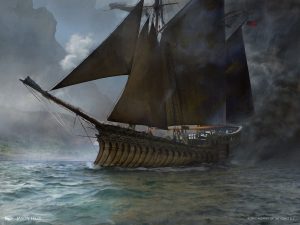
 Captain Biltmore, an experienced seaman, decided to set sail on a solo journey from Hawaii to the Marshall Islands. It was a very long and somewhat dangerous journey. The Captain departed in late summer for what he anticipated would be a two-week journey. His sailboat was well stocked, and with over 20 years of maritime experience, and five years as a captain, he yearned for the challenge. It was smooth sailing during the first few days, but then he received word that the weather may turn violent within two days. He checked his compass and maps and decided that he could make it to a set of little known islands about three days to his south. It was slightly off course, and more into the direction of the coming storm, but it was his only alternative. Captain Biltmore battled high waves and rough seas, but forge onward to his destination. After two days, his sail was ripped to pieces, and he started throwing cargo overboard to lighten the load. On day three, as he was approaching an uninhabited island, which was still about 40 knots away, his sailboat broke into pieces. Clinging to a large plank of wood which he used as a raft, he grabbed another board to be his paddle. He rowed and rowed for about a day, and finally reached the shore of this small island in complete darkness. Captain Biltmore was so exhausted that he crawled about 100 yards from the coast and collapsed in a deep sleep.
  When Captain finally woke the next morning, he could not believe what he saw. The sand is dark red. He mumbled, “I can’t believe it.” He then looked up into the sky, which was also dark red. Captain Biltmore continued to walk around a bit and sees that dark red grass, dark red birds, and dark red fruit on the dark red trees. He’s shocked when he finds that his skin is starting to turn dark red, too.
 Here is our verse for today:
 If you would like to listen to any of our past 1431 treks or read the Wisdom Journal, they are all available at Wisdom-Trek.com. I encourage you to subscribe to Wisdom-Trek on your favorite podcast player so that each day will be downloaded to you automatically.