Welcome to Day 1476 of our Wisdom-Trek, and thank you for joining me.
I am Guthrie Chamberlain, Your Guide to Wisdom
None Beside Me, and The Only Begotten Son – Worldview Wednesday
Wisdom – the final frontier to true knowledge. Welcome to Wisdom-Trek! Where our mission is to create a legacy of wisdom, to seek out discernment and insights, to boldly grow where few have chosen to grow before. Hello, my friend, I am Guthrie Chamberlain, your captain on our journey to increase Wisdom and Create a Living Legacy. Thank you for joining us today as we explore wisdom on our 2nd millennium of podcasts. Today is Day 1476 of our Trek, and it is Worldview Wednesday. Creating a Biblical Worldview is essential to have a proper perspective on today’s current events. To establish a Biblical Worldview, you must have a proper understanding of God and His Word. This week, on our Worldview Wednesday episode, we will continue with our study based on a course I recently completed taught by Dr. Michael Heiser. Our study is titled “Sons and Daughters of God: The Believer’s Identity, Calling, and Destiny” Throughout this multi-week course, we will demonstrate that, in the Old Testament, “sons of God” and “holy ones” refers to supernatural beings whose Father is God and who work with God to carry out His will and that this divine family was present before humanity. By fully engaging with biblical texts such as Psalm 82; Psalm 89, and Deuteronomy 32:8–9, our study will show that this divine family functions as a template for God’s human family. God desires of humans, as His imagers, to participate in His council. This study addresses issues such as polytheism, the nature of the (little ‘g’) “gods,” and the uniqueness of Yahweh. Within this study, we will apply insights to the New Testament texts and shows how the metaphor of being in God’s family informs our sense of identity and mission as believers.
None Beside Me, and The Only Begotten Son
· Segment 18: “None Beside Me” (Part 3)
 Incomparability Claim of Cities
As we continue on the topic of “None Beside Me,” there is one last thing I want to say about the so-called denial statements. There are other places in the Hebrew Bible where these are used. That is the same statements in situations or contexts that make it very obvious that denial of existence cannot be in the picture. For instance, in Isaiah 47:1, 8, 10, and Zepheniah 2:13, 15, in these passages respectively, the city of Babylon in the Isaiah reference and the city of Nineveh in the Zephaniah reference both claim, both say, “There is none beside me.”
Now, are we really going to believe that Babylon and Nineveh respectively actually thought, or wanted us to think, or the writer wanted us to think, that there was no other city than Babylon in existence, there was no other city but Nineveh in existence at the time of Zephaniah? Well, of course not. That would be absurd. There are hundreds and thousands of other cities in existence.
The point of the phrase “there is none beside me” is very clearly a claim of incomparability. Babylon is boasting, “There is nobody as good as me. There is nobody like me. No city measures up.” For the Assyrians, that’s how they thought about Nineveh: “Nineveh is the best. Nineveh is incomparable.”
Summary
So we have the same phrases used in contexts where, very obviously, a denial of existence just cannot work in any coherent way. That’s how we need to think about the denial phrases. When they are used in passages that seem to, on the one hand, deny the existence of the other elohim, but then you have all these other passages and sometimes even the same passage saying, “No, the elohim are real, and they are dangerous; they need to be dealt with. They are hostile to God. God is greater than them.” We can’t, on the one hand, affirm that they don’t exist and then have these other ideas (God’s incomparability to them, God’s greatness) mean anything.
The only way to do that is to say, “Yes, they are real.” The biblical writers thought they were real, and relatively speaking, they were nothing compared to the God of Israel.
· Segment 19: Jesus, the “Only Begotten” Son?
Introduction
The remaining question is: What do we do with Jesus? If you remember when we listed the questions that extend from all these “sons of God” languages in the Old Testament, we asked, “How do we align what the New Testament says about Jesus to all of this Old Testament material?” What we meant there was, in particular, New Testament verses (like John 3:16), we have Jesus described as the “only begotten Son.” But now, we’ve got all this Old Testament material with lots of “sons of God” in the picture. How do we bring these two things together? Is there a contradiction? What do we do here?
Meaning of Monogenēs
Well, the key here is to think correctly about monogenēs. That’s a Greek term—the one that gets translated “only begotten” in verses like John 3:16: “For God so loved the world, that he gave his only begotten son [monogenēs].”
So, what do we do with that? And why bring it up? Scholars used to think well into the late nineteenth century, spilling into the twentieth century that monogenēs was a combination of two Greek words: monos, which means “only,” and genaō. This verb means “to beget,” “to have children.” So, you put those things together, and you get “only begotten.” That’s typically the way monogenēs got translated in English Bibles.
More recent discoveries, though, in the Greek language and really Greek literature widely that matched and aligned itself very well with biblical material revealed that that was a mistaken notion. Monogenēs was not from monos and genaō; it was from monos, which means again “only,” and genē, which means “kind.” So monogenēs really means “one of a kind” or “unique.” That actually clears up the matter pretty well.
Jesus Is Yahweh Incarnate
We can have Jesus being the monogenēs son of God, the unique son of God, and still have other sons of God, other divine beings in the Old Testament, in the picture. There is something that made Jesus unique. What is that? Well, He is God incarnate; He’s Yahweh. The other sons of God, which we talked about at length in previous weeks, are not Yahweh; they are lesser.
Isaac Monogenēs but Not “Only Begotten”
So there’s really not a contradiction or a problem here. It’s really deriving from the English translation that the confusion comes. Now, the real proof of this is Hebrews 11:17. In that verse, we have Isaac, Abraham’s son, referred to as monogenēs. Now, here’s the question: Was Isaac Abraham’s only son that he gave birth to, had as a father biologically? No, he wasn’t. In fact, he wasn’t even the firstborn. Ishmael was also the son of Abraham.
So if we looked at monogenēs as being “only-begotten,” we’d have a real problem here because Isaac was not the only son that Abraham ever had. If we look at monogenēs as being “unique,” Isaac is the unique son of Abraham. Why? Because he was the son born of the promise. He was the son born from Sarah, who was barren.
Summary
So it’s an excellent illustration of how monogenēs really refers to uniqueness. So Jesus is the unique Son of God. Again, the reason He is unique is that He is God, and that furthermore clarifies for us the relationship between this language and sons of God in the Old Testament.[1]
That will finish our study for this week’s Worldview Wednesday. Next week we will begin a new section covering “Human Family As Imagers.” Tomorrow we will enjoy our 3-minute Humor nugget that will provide you with a bit of cheer, which will help you to lighten up and live a rich and satisfying life. So encourage your friends and family to join us and then come along with us tomorrow for another day of ‘Wisdom-Trek, Creating a Legacy.’ If you would like to listen to any of our past 1475 treks or read the Wisdom Journal, they are available at Wisdom-Trek.com. I encourage you to subscribe to Wisdom-Trek on your favorite podcast player so that each day’s trek will be downloaded automatically.
Thank you so much for allowing me to be your guide, mentor, and, most of all, your friend as I serve you in through this Wisdom-Trek podcast and journal.
As we take this Trek together, let us always:
- Live Abundantly (Fully)
- Love Unconditionally
- Listen Intentionally
- Learn Continuously
- Lend to others Generously
- Lead with Integrity
- Leave a Living Legacy Each Day
I am Guthrie Chamberlain….reminding you to ’Keep Moving Forward,’ ‘Enjoy your Journey,’ and ‘Create a Great Day…Everyday’! See you Tomorrow!
[1] Heiser, M. S. (2019). Sons and Daughters of God: The Believer’s Identity, Calling, and Destiny. Bellingham, WA: Lexham Press.
 My personality is such, where I have difficulty taking time to rest, relax, and renew. There always seems to be so much that needs to be completed. The workload from clients seems to be constant, and more than I can reasonable achieve in any given week. I have my daily podcast to write, record, edit, and publish. There is also an endless list of repair and upkeep activities in and around The Big House. I feel a sense of self-imposed guilt whenever I take time to rest, knowing that the other tasks are continuing to pile up. As I grow older, and hopefully wiser, I know that I need to force myself to unplug and to retire from time to time for some solitude and prayer. I don’t know if it will ever be easy for me to do so without feeling ashamed, but I do understand how important it is. I have to understand and recognize that God’s Son, Jesus Christ, had constant demands on His time and the weight of all humankind on His shoulders and yet He often withdrew into the wilderness to renew Himself physically, emotionally, mentally, and spiritually. If Christ himself needed to retire from time to time to the wilderness to pray, I, being so much lesser than He is, should never be ashamed to acknowledge my necessity to do the same.
 If you would like to listen to any of our past 1474 treks or read the Wisdom Journal, they are available at Wisdom-Trek.com. I encourage you to subscribe to Wisdom-Trek on your favorite podcast player so that each day’s trek will be downloaded automatically.
 Dr. Heiser shares this personal story to help understand this insight. I spent two summers during college as a pastoral intern. I enjoyed it, though the experience contributed to the realization that I wasn’t cut out for pastoral ministry. I knew my calling was different. Something I did during that time also taught me a lot about what Bible study wasn’t—or at least shouldn’t be.
 I understood the intent of the instruction: don’t turn the sermon into a classroom session. That’s good advice for several reasons. But it made the task incredibly difficult. I finally concluded that all I needed to do was go through the passage, make an observation here and there, and apply those observations to people’s spiritual lives—to our aspirations, failures, God’s forgiveness, and the need for consistency as followers of Jesus.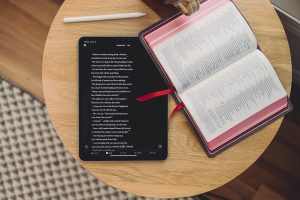
 If you would like to listen to any of the past 1473 daily treks or read the daily Journal, they are available at Wisdom-Trek.com. I encourage you to subscribe to Wisdom-Trek on your favorite podcast player so that each day will be downloaded to you automatically.
 Last week we focused on transportation, flying cars, and the rise of ridesharing. This week we will learn how AI, Robots, and Drones can assist during natural or human-made disasters. I am using some of the information mentioned in Peter Diamandis’s blogs and book “The Future is Faster Than You Think.”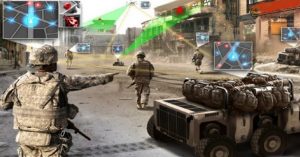
 Here is one scenario called One Concern. Created at Stanford under the mentorship of leading AI expert Andrew Ng, One Concern leverages AI through analytical disaster assessment and calculated damage estimates. Partnering with the City of Los Angeles, San Francisco, and numerous cities in San Mateo County, the platform assigns verified, unique ‘digital fingerprints’ to every element in a city. With these digital fingerprints, they can build robust models of each system. One Concern’s AI platform can then monitor site-specific impacts of not only climate change but each individual natural disaster, from sweeping thermal shifts to seismic movement.
 As hardware advancements converge with exploding AI capabilities, disaster relief robots are graduating from assistance roles to fully autonomous responders at a breakneck pace.
 Think about this idea. What if we need to build emergency shelters from local soil at hand? Marking an extraordinary convergence between robotics and 3D printing, the Institute of Advanced Architecture of Catalonia (IAAC) is already working on a solution.
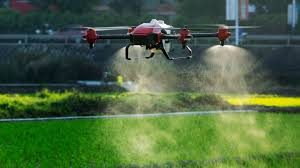
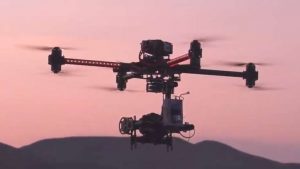 As presented by a team of electrical engineers from the University of Science and Technology of China, drones could even build out a mobile wireless broadband network in record time using a “drone-assisted multi-hop device-to-device” program.
 I hope that brought a smile to your face today. If it did pass your smile onto some else, we all could use a kind smile each day. Our Thursday thought is, “I tripped over a box of Kleenex this morning and thought I had broken my ankle. Thankfully, it was just soft tissue damage.”
 If you would like to listen to any of our past 1471 treks or read the Wisdom Journal, they are all available at Wisdom-Trek.com. I encourage you to subscribe to Wisdom-Trek on your favorite podcast player so that each day will be downloaded to you automatically.